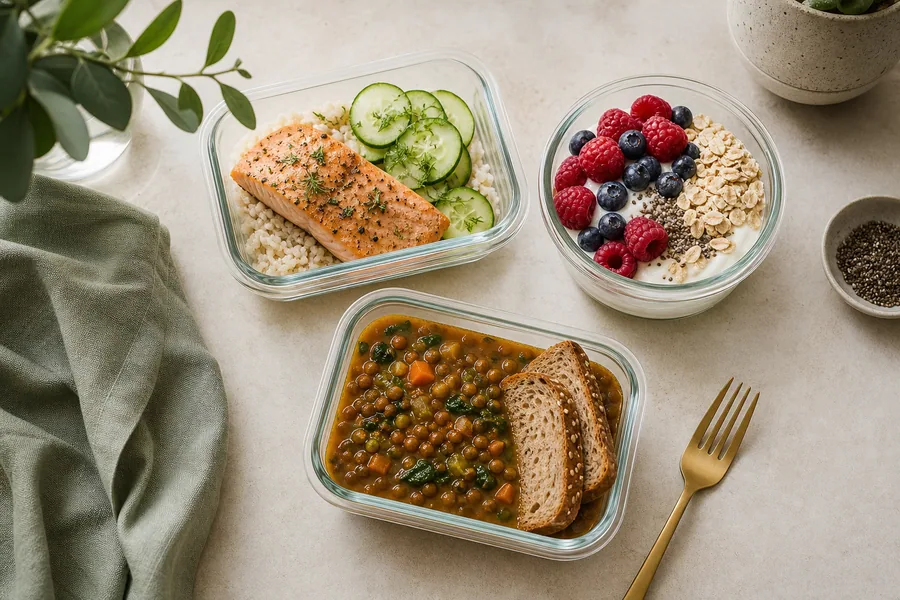
A GLP-1 meal plan works best as a flexible menu, not a strict calendar. Appetite and food tolerance may change, so a plan needs smaller options, more substantial options, and dependable backups. It should also fit medication instructions and individualized advice from the prescribing team.
This seven-day framework provides choices rather than a prescription. Amounts are intentionally not specified because energy, protein, fluid, and other needs vary.
Before planning the week
Choose three protein foods you usually tolerate, three produce items, two carbohydrates, two flavor boosters, and two backup meals. Check storage space and the week’s schedule.
Examples include eggs, yogurt, tofu, chicken, fish, beans, berries, bananas, cooked vegetables, rice, potatoes, oats, salsa, pesto, soup, and frozen entrees.
If symptoms are new, severe, or persistent, contact the healthcare team rather than trying to solve them with a menu.
Day one: familiar foods
Breakfast: yogurt with fruit and oats. Lunch: chicken or tofu soup with toast. Dinner: salmon or tofu with rice and cooked vegetables.
Start with familiar flavors so the week does not depend on new recipes. Save leftovers in manageable portions.
Day two: prepared components
Breakfast: eggs and toast. Lunch: leftover salmon rice bowl. Dinner: rotisserie chicken or beans with microwaveable grain and frozen vegetables.
Prepared components reduce work without requiring a full delivered meal. Add sauce after reheating so flavor can be adjusted.
Day three: plant-forward options
Breakfast: overnight oats with yogurt or soy yogurt. Lunch: lentil soup with fruit. Dinner: tofu noodle bowl with cooked vegetables.
Beans and lentils contribute protein and fiber, but rapid increases may be uncomfortable for some people. Use familiar amounts and adjust with professional guidance.
Day four: the backup day
Breakfast: cottage cheese or yogurt with fruit. Lunch: hummus, pita, vegetables, and an egg. Dinner: a frozen or delivered entree.
The backup day is planned on purpose. Review the entree’s serving size, protein, fiber, sodium, ingredients, allergens, and storage instructions. Add a side only if useful.
Day five: flexible family meal
Breakfast: eggs or tofu scramble. Lunch: leftovers. Dinner: tacos with beans, fish, chicken, or tofu plus cabbage, salsa, and avocado.
Serve components separately so each person can choose amounts and toppings. This avoids making one plate the special medication meal.
Day six: low-effort choices
Breakfast: toast with nut butter and yogurt. Lunch: tuna and white-bean salad with crackers. Dinner: soup and a sandwich.
If appetite is smaller, divide the meal into two eating opportunities if that fits your care plan. Store perishable food promptly.
Day seven: use what remains
Breakfast: oats with remaining fruit. Lunch: a grain bowl with leftover protein and vegetables. Dinner: a freezer portion or simple eggs and toast.
Review what was eaten and what went to waste. Use that information to plan the next week rather than forcing the same quantities.
Make portions adjustable
Serve less initially when a large plate feels overwhelming, with more available. Use small containers for leftovers. Choose prepared meals that can be divided safely.
Smaller does not automatically mean adequate. Ongoing difficulty eating, unintended rapid weight change, weakness, dizziness, or food preoccupation deserves clinical attention.
Keep fluids in the plan
Follow your healthcare team’s fluid guidance, especially if a condition affects fluid needs. Keep preferred beverages available and discuss timing if drinking with meals feels uncomfortable.
Persistent vomiting, diarrhea, or difficulty keeping fluids down can contribute to dehydration and needs prompt professional guidance.
Evaluate delivery without the marketing label
A service that uses GLP-1 language is not automatically a better medical fit. Review relevant menu variety, complete nutrition labels, portion flexibility, full price, delivery reach, storage, and account controls.
No service knows your full clinical situation. Use delivered meals as a convenience tool, not a replacement for care.
Use a weekly tolerance note carefully
A short note can help you remember which meals felt manageable, which portions created waste, and which textures or temperatures appealed. Record observations rather than declaring foods permanently safe or unsafe. Symptoms can have many causes, and patterns need clinical context.
Bring persistent concerns to the prescribing team. A note may help that conversation, but it cannot diagnose a medication effect or another condition. Avoid repeatedly testing a food that has caused a serious reaction, and seek appropriate allergy care when relevant.
Protect social and cultural meals
The framework can travel to restaurants, family tables, and cultural celebrations. Choose familiar components, begin with a manageable amount, and take more if wanted. You do not need to explain your plate or turn a shared meal into a public medication discussion.
Flexibility matters because a plan that only works at home is incomplete. The goal is to support nourishment and participation, not create a separate food identity.
Sources and further reading
- FDA information for patients and providers on semaglutide products
- NIDDK food portion guidance
- USDA MyPlate protein foods
This sample week is general education. Follow your medication guide and individualized instructions from your healthcare team.