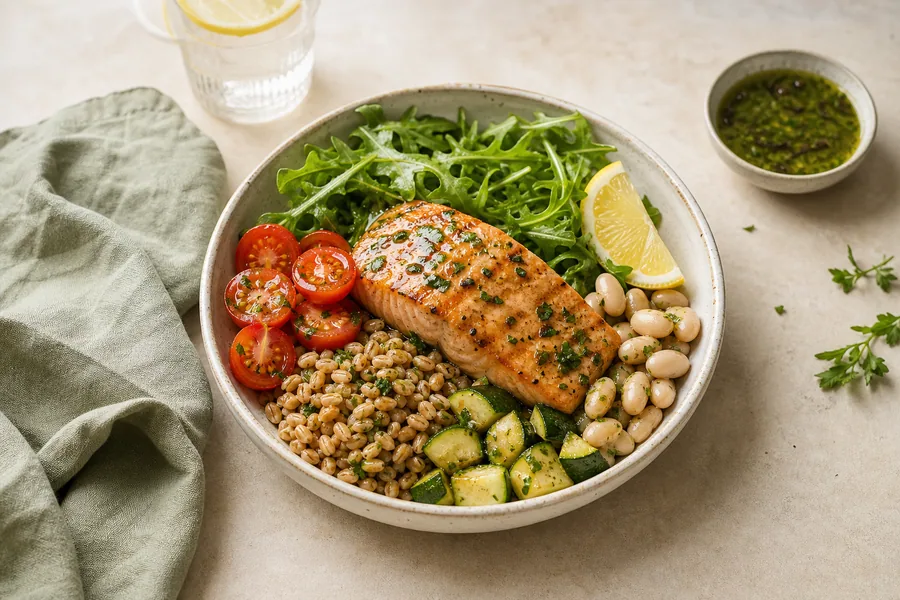
“GLP-1 meals” is a practical search phrase, not a medically standardized menu. People using GLP-1 medications may experience changes in appetite, fullness, food preferences, or gastrointestinal comfort, but the experience is not identical for everyone. A meal that feels manageable one week may not appeal the next.
The safest approach is flexible and coordinated with the prescribing team. This guide offers general planning ideas. It does not change medication instructions, diagnose side effects, or set a personal nutrition target.
Begin with the most useful bite
When appetite is smaller, it can help to begin the meal with a protein food you tolerate. Options include eggs, yogurt, cottage cheese, fish, poultry, tofu, beans, lentils, or another familiar choice.
Add produce, a carbohydrate, and fat or sauce in amounts that feel manageable. This might look like yogurt with fruit and oats, eggs with toast, chicken with rice and vegetables, or tofu soup with noodles.
Protein-first is a planning sequence, not a rule that carbohydrates or vegetables are less important.
Let portions stay flexible
A standard restaurant portion or delivered entree may feel too large when appetite changes. Serve less initially, keep more available, and store leftovers safely. On another day, a larger meal may feel appropriate.
Do not use another person’s portion as your target. Overall nutritional adequacy matters, especially when appetite remains low over time. A registered dietitian can help translate individual needs into a meal and snack pattern.
Build a small rotation
Choose foods across several textures and temperatures:
- Cool yogurt with fruit and oats
- Warm eggs with toast
- Broth-based chicken or tofu soup
- A rice bowl with fish and vegetables
- A smoothie paired with another food if tolerated
- Bean soup with bread and cheese or yogurt
- A prepared meal that can be divided
The list gives you alternatives when one format stops sounding appealing. It does not assume that cool, soft, or bland foods work for everyone.
Plan for variable appetite
Keep smaller components that can become either a snack or a meal. Eggs, yogurt, canned fish, cooked grains, fruit, soup, frozen vegetables, hummus, and crackers can be combined in different amounts.
A large batch recipe can be frozen in individual portions. Prepared meals can be divided when storage guidance allows. This reduces waste and the pressure to finish a large plate.
Consider hydration alongside food
Fluid needs are individual, and some medical conditions require specific guidance. Keep beverages available and follow advice from your care team. If drinking a large amount with a meal feels uncomfortable, ask your clinician about a timing approach that fits your care plan.
Persistent vomiting, diarrhea, inability to keep fluids down, severe pain, dizziness, or other signs of dehydration need prompt professional guidance. Do not rely on an online menu to manage concerning symptoms.
Compare prepared meals carefully
For frozen or delivered meals, begin with serving size and servings per container. Review protein, fiber, sodium, saturated fat, added sugars, ingredients, allergens, and storage instructions.
Look beyond a GLP-1 label. Ask whether the service offers enough meals you would actually eat, whether portions can be divided, and whether full nutrition data is available. Include delivery fees and minimum orders in the price.
Avoid unnecessary food rules
Some foods may feel less comfortable for an individual at a particular time. That does not make them universally prohibited. Track patterns if helpful, but avoid removing entire food groups without a clear reason and appropriate guidance.
Medication-specific instructions come from the prescribing information and healthcare team. Do not change a dose or schedule in response to a food article.
A simple day of options
Breakfast might be yogurt, berries, and oats. Lunch could be soup with toast and an egg. Dinner might be salmon, rice, and cooked vegetables in a manageable portion. A snack could be fruit with cottage cheese or crackers with tuna.
This is an example, not a required plan. Vegetarian, vegan, culturally specific, allergy-aware, and budget-focused patterns can use the same flexible structure.
Sources and further reading
- FDA information for patients and providers on semaglutide products
- NIDDK guidance on food portions
- USDA MyPlate protein foods
This article provides general education. Follow medication instructions and individualized advice from your healthcare team.