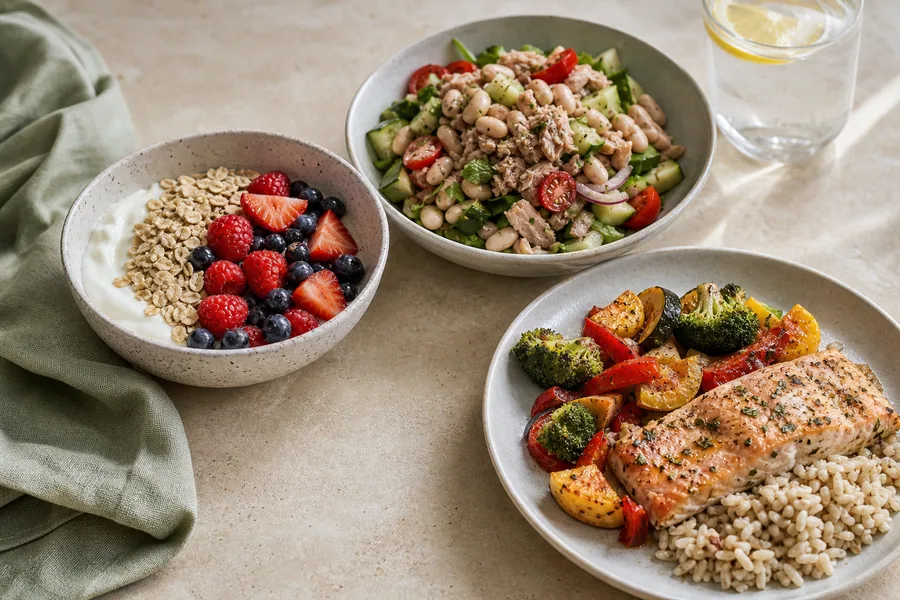
Searching for meals for weight loss often leads to highly specific menus that assume you like every ingredient and have time to cook daily. A better list gives you combinations that can be changed. Each idea below includes a protein source, produce, and a satisfying carbohydrate, but the amounts and ingredients are flexible.
No meal guarantees weight loss, and an appropriate plan depends on your health and overall intake. Use these ideas as building blocks rather than a prescription.
Four breakfasts
Yogurt oat bowl. Combine plain Greek yogurt, oats or whole-grain cereal, berries, and nuts. Use a dairy-free yogurt with meaningful protein if preferred.
Egg and vegetable toast. Add scrambled or boiled eggs to whole-grain toast with tomatoes, spinach, peppers, or leftover roasted vegetables.
Tofu breakfast wrap. Fill a tortilla with tofu scramble, black beans, vegetables, and salsa. Make extra filling for tomorrow.
Overnight oats with a protein side. Prepare oats with milk and fruit, then add yogurt, cottage cheese, eggs, or nut butter depending on appetite.
Breakfast does not need to be sweet, and leftovers are valid morning food.
Four lunches
Tuna and bean salad. Mix tuna, white beans, chopped vegetables, lemon, and olive oil. Serve with crackers or bread.
Chicken grain bowl. Layer microwaveable brown rice, rotisserie chicken, frozen vegetables, and a favorite sauce.
Lentil soup plate. Pair canned or homemade lentil soup with fruit, yogurt, or half a sandwich.
Hummus snack box. Pack hummus, vegetables, whole-grain pita, fruit, and an egg or edamame. This works well when a composed entree feels unappealing.
For work lunches, choose foods that travel safely and keep an ice pack available when refrigeration is limited.
Four dinners
Sheet-pan salmon and vegetables. Roast salmon, broccoli, and potatoes on one tray. Frozen vegetables can reduce prep.
Bean and turkey chili. Use beans, lean ground turkey, tomatoes, peppers, and spices. Freeze individual portions.
Tofu stir-fry. Cook tofu with a frozen vegetable blend and bottled stir-fry sauce. Serve with rice or noodles.
Prepared-meal upgrade. Choose a frozen or delivered entree and add a simple side, such as fruit, vegetables, soup, or yogurt, if the original portion does not feel complete.
These dinners can be scaled for one person or a household. Sauces and toppings let people customize flavor.
Turn twelve ideas into a short shopping list
You do not need ingredients for all twelve in the same week. Select one breakfast, two lunches, and two dinners. Look for overlap.
For example, yogurt works in breakfast and with soup. Frozen vegetables work in eggs, grain bowls, stir-fry, and as a prepared-meal side. Beans work in salad, wraps, and chili. This overlap lowers cost and food waste.
Add two backup options that require almost no preparation. Eggs and toast, a freezer meal, or canned soup and a sandwich can protect the plan when the day changes.
Adjust portions without making a separate meal
Serving size and portion are different. The label provides a standard reference. Your portion is what you choose to eat. Begin with an amount that matches your current appetite and save or add food as needed.
For family meals, put components on the table. One person may want more rice, another more vegetables, and another a smaller plate with seconds available. Flexibility is easier than preparing separate “diet” food.
Use the Nutrition Facts label as a comparison tool
For packaged foods, check serving size, servings per container, protein, fiber, sodium, saturated fat, added sugars, and allergens. Numbers make the most sense when compared among similar products.
Do not assume the lowest-calorie meal is automatically the most useful. If it is very small or lacks protein and fiber, you may need sides. Consider the whole meal and how it fits the day.
Plan for satisfaction
Flavor helps a plan last. Keep two sauces or condiments you enjoy, such as salsa, vinaigrette, pesto, curry sauce, or tahini. Add crunchy toppings, herbs, citrus, or spice. Satisfaction can also come from temperature and texture, not only meal size.
If a plan repeatedly leaves you preoccupied with food, overly hungry, or anxious, it may need adjustment. A registered dietitian can help build an approach that supports both nutrition and quality of life.
Sources and further reading
These meal ideas provide general education and can be adapted with guidance from your healthcare team.