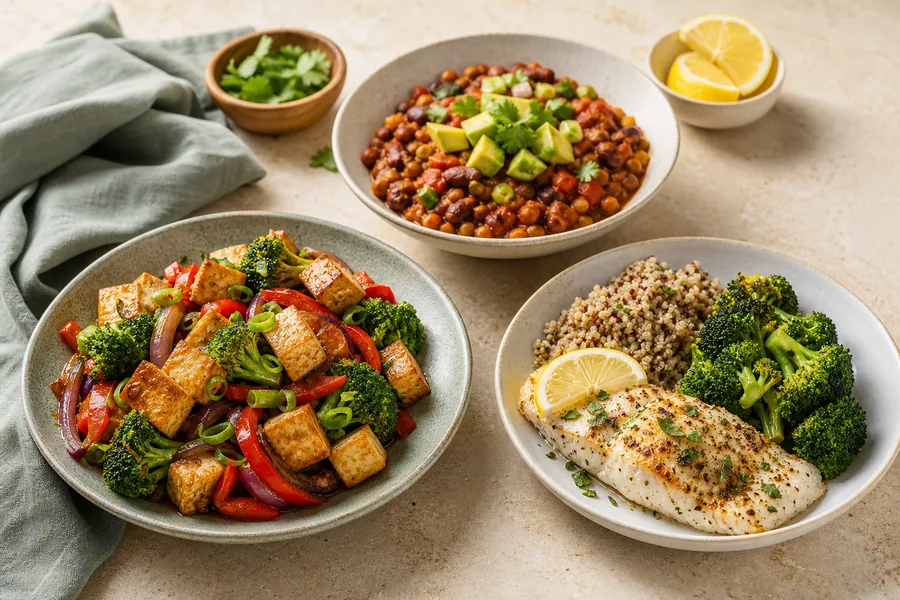
Protein meals for weight loss are most useful when protein is an anchor rather than the entire plan. Protein foods contribute nutrients and can support satisfaction, but vegetables, fruit, whole grains, beans, fats, and flavor still belong.
The fifteen combinations below use both animal and plant proteins. Adjust ingredients and portions for appetite, allergies, culture, budget, and clinical guidance. No meal guarantees weight loss.
Five breakfasts and small meals
1. Greek yogurt bowl. Add berries, oats, and walnuts to plain Greek yogurt.
2. Egg toast plate. Serve eggs with whole-grain toast, tomatoes, and fruit.
3. Tofu scramble wrap. Combine tofu, peppers, black beans, salsa, and a tortilla.
4. Cottage cheese plate. Pair cottage cheese with tomatoes, fruit, crackers, and seeds.
5. Overnight oats plus yogurt. Make oats with milk and fruit, then add yogurt for a protein boost.
These can be breakfast, lunch, or a smaller evening meal. Meal labels do not have nutritional importance.
Five lunches
6. Tuna white-bean salad. Mix tuna, beans, chopped vegetables, olive oil, and lemon. Serve with bread or crackers.
7. Chicken grain bowl. Use chicken, brown rice, vegetables, and tahini or salsa.
8. Lentil soup plate. Pair lentil soup with yogurt, fruit, or half a sandwich.
9. Tempeh wrap. Fill a wrap with tempeh, slaw, avocado, and a flavorful sauce.
10. Egg and hummus snack box. Pack eggs, hummus, vegetables, pita, and fruit.
Lunch should be large enough to support the afternoon. If you are hungry soon after, add food rather than treating hunger as failure.
Five dinners
11. Salmon, potatoes, and green beans. Roast or air-fry the components with seasoning.
12. Turkey bean chili. Combine lean turkey, beans, tomatoes, vegetables, and spices.
13. Tofu noodle stir-fry. Cook tofu with frozen vegetables, noodles, and sauce.
14. Chicken pasta with spinach. Add chicken and vegetables to pasta with tomato sauce or pesto.
15. Loaded bean potato. Top a baked potato with beans, broccoli, salsa, and cheese or yogurt.
Mixed dishes make it easy to vary the proportion of protein, carbohydrate, and vegetables without cooking separate meals.
How to choose among protein foods
Consider more than grams. Look at cost, preparation, sodium, saturated fat, fiber, allergens, storage, and enjoyment. Beans and lentils contribute fiber. Fish can provide different fats. Dairy offers calcium in many products. Tofu and tempeh provide plant-based variety.
Processed meats and some prepared proteins can be high in sodium or saturated fat. That does not require absolute avoidance, but the label helps you compare products and frequency.
Spread opportunities across the day
Including protein at more than one eating occasion can be practical, especially if a very large evening meal is unappealing. Add yogurt to breakfast, beans to lunch, and fish or tofu to dinner.
This is a planning approach, not a mandatory schedule. Individual targets and timing vary. If appetite is small, ask a dietitian how to support adequate intake without forcing uncomfortable portions.
Keep plants and carbohydrates
A protein-focused plan can become narrow if every meal centers only on meat, eggs, or shakes. Include vegetables, fruit, whole grains, beans, potatoes, and other carbohydrate foods that fit your needs.
Carbohydrates provide energy. Fiber-rich choices can contribute fullness and digestive health, though rapid increases may be uncomfortable for some people. Adjust gradually and consider fluids as advised.
Compare convenience products
For bars, shakes, frozen meals, and delivered entrees, read the serving size first. Then compare protein with fiber, sodium, saturated fat, added sugars, ingredients, and price.
A large protein claim does not automatically make the product a complete meal. Add other components when useful. Choose products that solve a real convenience need rather than assuming they are required.
When to seek individualized guidance
Protein needs can change with age, activity, pregnancy, illness, and medical conditions. Kidney disease in particular may require individualized advice. Seek help if you have rapid unintended weight change, persistent difficulty eating, or a history of disordered eating.
Prep one protein, then change the format
Cooking one flexible protein can support several meals without making them feel identical. Roast chicken can become a grain bowl, sandwich, taco, or soup. Lentils can become curry, salad, pasta sauce, or a side. Baked tofu can move from a noodle bowl to a wrap.
Store cooked food promptly and follow safe refrigeration and reheating guidance. Freeze portions you will not use within the recommended window. Planning the second use before cooking reduces waste.
Flavor creates the variation. Pair the same protein with salsa and avocado one day, pesto and tomatoes the next, then a ginger sauce with frozen vegetables. This approach makes protein-forward planning less expensive and lowers preparation time without requiring a narrow menu.
Sources and further reading
This article gives general meal ideas and does not set a personal protein or weight-loss target.