Lists of the “best meals for weight loss” often rank foods without knowing the person eating them. A lentil bowl may be excellent for one reader and a poor fit for someone with an allergy or digestive limitation. A delivered entree may solve a major time barrier for one household and be too expensive for another.
The best meal is therefore not one recipe. It is a meal that performs well across five practical tests: nutrition, satisfaction, effort, cost, and personal fit.
Test 1: Does it contribute useful nutrition?
Look for a meaningful protein source, produce, and a fiber-rich carbohydrate across the meal. Include fats and flavorings that make the food enjoyable. No single plate needs to include every nutrient, but the overall day should offer variety.
Protein options include eggs, dairy, fish, poultry, lean meat, tofu, tempeh, beans, and lentils. Produce can be fresh, frozen, canned, cooked, or raw. Whole grains, beans, fruit, potatoes, and other carbohydrate foods provide energy and can contribute fiber.
Test 2: Is it satisfying?
A meal that looks ideal on paper but leaves you hungry is not functioning well. Satisfaction is affected by amount, protein, fiber, fat, taste, texture, and timing. It also varies from day to day.
Use hunger as feedback. Add more food or a side if the meal is consistently inadequate. If a large serving feels uncomfortable, try a smaller portion with another eating opportunity later. Neither response is a moral judgment.
Test 3: Can you make or obtain it on a normal day?
Count the entire task: shopping, preparation, dishes, storage, and cleanup. A recipe with twenty ingredients may not be your best Tuesday meal. A five-minute combination may be more valuable.
Examples include a frozen grain bowl with extra vegetables, eggs and toast with fruit, rotisserie chicken with microwaveable rice and salad, or canned bean soup with yogurt. Convenience can support consistency.
Test 4: Does the cost make sense?
The lowest sticker price is not always the lowest usable cost. Include delivery fees, required order size, spoilage, and whether leftovers will be eaten. Compare unit prices for staples and price per meal for services.
Beans, eggs, lentils, canned fish, frozen produce, store-brand grains, and seasonal items can stretch a budget. More expensive ingredients can be used in mixed dishes rather than as the whole plate.
Test 5: Does it fit the person?
Culture, allergies, medical needs, cooking access, sensory preferences, medications, and family routines all shape a workable meal. A recommendation that ignores those factors is incomplete.
This is also where clinical advice belongs. People with kidney disease, diabetes, gastrointestinal conditions, food allergies, pregnancy, or a history of disordered eating may need individualized guidance.
Five meal patterns that score well
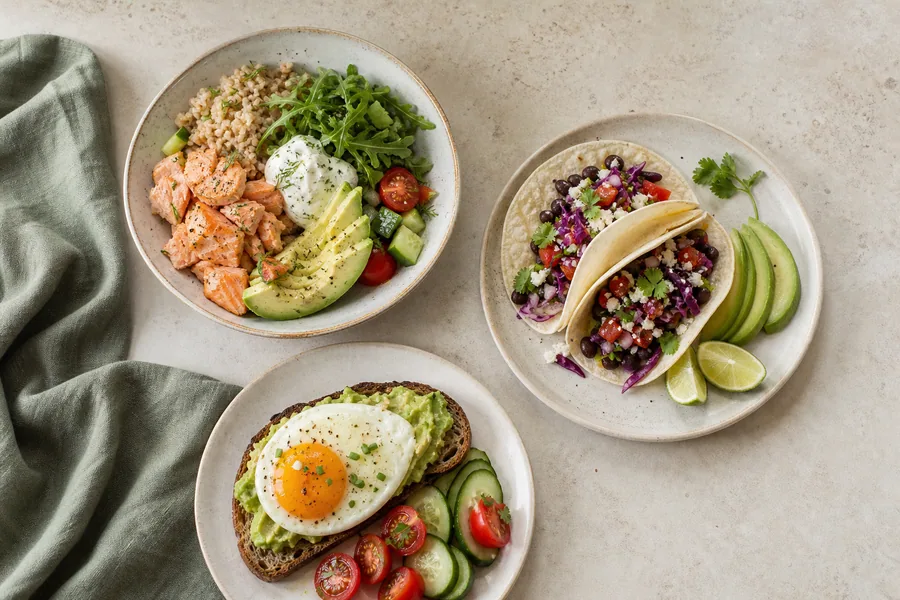
The bowl: protein, grain or starchy vegetable, produce, and sauce. Try salmon with rice and cucumber, or tofu with noodles and vegetables.
The soup plate: bean, chicken, or lentil soup with bread, fruit, yogurt, or a sandwich. Soup is easy to portion and freeze.
The breakfast-for-dinner plate: eggs or tofu, toast or potatoes, and vegetables or fruit. It is fast and uses common staples.
The flexible taco: beans, fish, chicken, or tofu with tortillas, vegetables, salsa, and avocado or cheese. Everyone can assemble their own.
The prepared base: a frozen or delivered entree paired with an easy side if needed. Review the label and storage directions rather than judging convenience itself.
A two-minute meal scorecard
Before adding a meal to your regular rotation, ask:
- Does it include a protein I like?
- Is there a fruit or vegetable?
- Will the amount likely be satisfying?
- Can I afford the ingredients or full delivered cost?
- Can I prepare, store, and clean up after it?
- Would I want to eat it again next week?
Four or five strong answers may matter more than a perfect nutrition score with no practical fit.
The role of variety
Repeating meals is efficient, but some variety supports nutrient intake and enjoyment. Rotate one component at a time. Keep the bowl format and change chicken to beans. Keep breakfast and switch berries to peaches. Keep taco night and vary the filling.
This approach creates variety without rebuilding your grocery list. It also lets you compare how different meals affect hunger, energy, digestion, and satisfaction.
Keep the claim in proportion
Meals can support an intentional weight-management plan, but they do not guarantee a particular rate or outcome. Weight is influenced by many factors, and rapid or unintended changes deserve professional attention. Choose an approach that protects adequate nutrition and can coexist with daily life.
Sources and further reading
- NIDDK guidance on choosing a safe weight-loss program
- NIDDK food portion guidance
- Dietary Guidelines for Americans
This article is general education and does not rank meals for an individual’s medical needs.