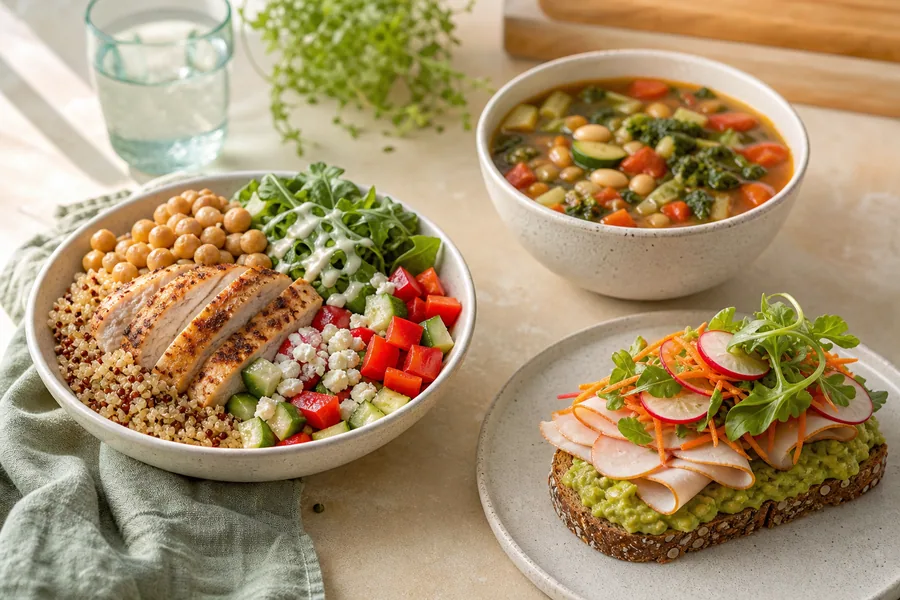
The phrase “weight-loss meal” can sound as if a recipe has special powers. It does not. A meal can support a broader plan by providing useful nutrition, fitting an appropriate energy pattern, and helping you stay satisfied. The most effective version is usually ordinary enough to make again.
Rather than dividing foods into good and bad categories, look at the job a meal needs to do. It should provide energy, contribute nutrients, taste acceptable, fit the moment, and carry you toward the next planned meal or snack.
Use a simple meal formula
Choose one item from each group and adjust the amount to your appetite:
- Protein: chicken, fish, eggs, yogurt, cottage cheese, tofu, beans, lentils, or lean meat
- Produce: any vegetable or fruit, including frozen and canned options
- Carbohydrate: potatoes, rice, oats, quinoa, bread, pasta, corn, beans, or fruit
- Flavor: herbs, spices, salsa, vinaigrette, pesto, cheese, avocado, nuts, or seeds
This formula can become tacos, pasta, soup, a snack plate, a grain bowl, or breakfast. It is intentionally broad because a sustainable eating pattern needs to work across cuisines and budgets.
Plan for three kinds of days
Most meal plans are written for an ideal day. Real weeks have at least three versions.
On a cooking day, make something that creates useful leftovers, such as sheet-pan chicken and vegetables, bean chili, a tofu stir-fry, or a pot of soup. On a quick day, combine prepared components, such as a grain pouch, frozen vegetables, and canned fish. On a backup day, use a frozen meal, eggs, yogurt, or a sandwich.
Planning all three prevents the backup choice from feeling like a failure. It is part of the system.
Favor meals that reduce rebound hunger
Hunger after eating can have many causes, including a portion that was too small, a long gap between meals, or a meal with little protein or fiber. Instead of treating hunger as a lack of willpower, use it as data.
If lunch is a small green salad and you are searching for snacks an hour later, add a substantial protein, a carbohydrate, and dressing. If breakfast is coffee and a piece of fruit, consider yogurt, eggs, nut butter, or oats. The goal is not to make meals as light as possible. It is to make the overall pattern workable.
Keep favorite foods in the plan
An eating plan that excludes every favorite is hard to sustain. Pizza can be paired with a salad or vegetables if you want them. A burger can be enjoyed as a meal rather than treated as a mistake. Dessert can be part of a week without needing compensation the next day.
This flexibility also reduces the all-or-nothing thinking that can turn one unplanned choice into an abandoned plan. The next meal can simply be the next meal.
Shop for components, not aspirations
Before buying produce, decide how it will be used. A bag of spinach could go into eggs, pasta, soup, or a sandwich. Frozen vegetables can wait for a busy night without spoiling. Canned beans can become tacos, bowls, or salad.
A practical shopping list might include two proteins, two vegetables, two fruits, two carbohydrates, one sauce, and two backup meals. Add staples you already use. This short list is more likely to become meals than a cart full of unrelated “healthy” products.
Evaluate convenience meals fairly
Prepared and frozen meals can reduce time and portion decisions. Compare the full cost, including shipping and minimum orders for delivery services. Review the serving size, protein, fiber, sodium, allergens, and storage instructions.
A prepared entree does not have to be nutritionally complete on its own. You can add fruit, vegetables, yogurt, soup, or another side. You can also divide a large entree if that better matches your appetite, provided leftovers are stored safely.
Measure success beyond the scale
Weight can fluctuate for reasons unrelated to body fat. Other useful signals include regular meals, steadier energy, fewer last-minute purchases, less food waste, improved cooking confidence, or a pattern that better supports blood pressure or glucose goals set with your clinician.
If weighing or tracking increases anxiety, speak with a qualified professional about other ways to assess progress. A plan should support health, not consume your attention.
A realistic day of meals
Breakfast could be eggs, whole-grain toast, and fruit. Lunch might be lentil soup with yogurt and vegetables. Dinner could be a prepared chicken and grain bowl with extra frozen vegetables. A snack might include fruit and nuts or crackers with tuna.
This is an example, not a prescription. Your culture, schedule, allergies, appetite, and health needs may lead to a completely different and equally valid day.
Sources and further reading
- NIDDK guidance on healthy eating and weight management
- NIDDK guidance on choosing a weight-loss program
- Dietary Guidelines for Americans
This article is general education. It does not promise weight loss or replace care from a qualified professional.