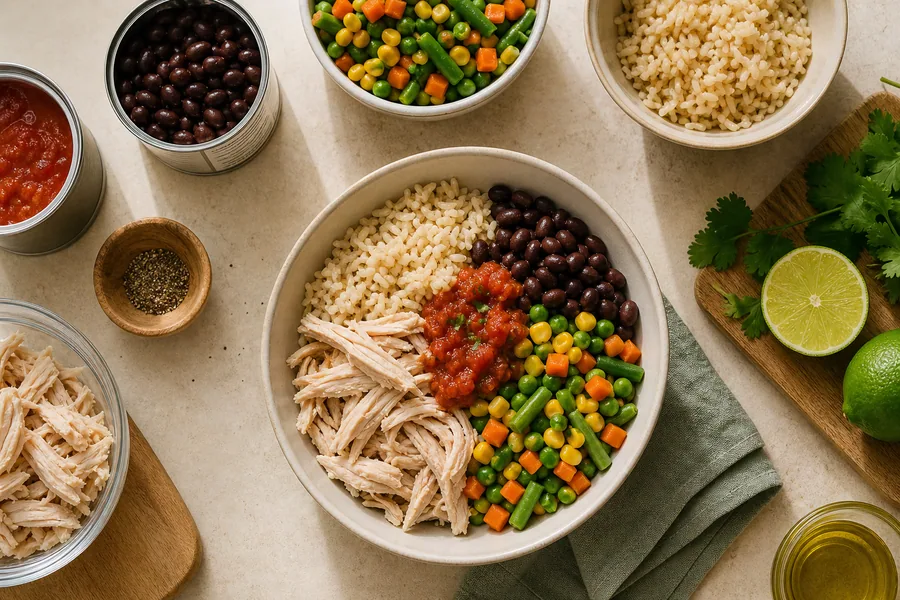
Easy healthy meals for weight loss begin with an honest definition of easy. For one person it means ten minutes. For another it means no stove, one hand free, or ingredients that last until the end of the week. The right shortcut is the one that removes your actual barrier.
A meal does not become less nutritious because someone else washed, chopped, cooked, or froze part of it. Convenience foods can help create a consistent pattern when time, mobility, energy, or cooking experience is limited.
Use the one-one-one-one formula
Choose one item from each group:
- One ready protein
- One fruit or vegetable
- One quick carbohydrate
- One sauce or flavor booster
Rotisserie chicken, frozen broccoli, microwaveable rice, and pesto make a bowl. Canned beans, bagged slaw, tortillas, and salsa make tacos. Yogurt, frozen berries, oats, and nuts make breakfast.
The formula is broad enough to fit many cuisines and price points.
Ten-minute breakfasts
Combine Greek yogurt with fruit and whole-grain cereal. Make toast with eggs and sliced tomato. Stir oats, milk, fruit, and nut butter together. Fill a tortilla with microwaved beans, cheese, and salsa.
If morning appetite is low, a smaller meal and a later snack may feel better. If skipping breakfast works for you, it is not mandatory unless it is part of your medical plan.
No-cook lunches
Try tuna mixed with white beans and vinaigrette, served with crackers. Make a turkey sandwich with bagged salad and fruit. Assemble hummus, pita, vegetables, olives, and an egg. Combine cottage cheese, tomatoes, whole-grain toast, and fruit.
Keep food safety in mind. Use refrigeration or an insulated bag for perishable foods and follow package storage instructions.
Fifteen-minute dinners
Heat a frozen grain blend and vegetables, then add tofu or rotisserie chicken. Warm canned lentil soup and serve it with bread and yogurt. Cook eggs with frozen peppers and add toast. Toss refrigerated pasta with tuna, spinach, tomatoes, and dressing.
A prepared or frozen entree is also a complete answer on a busy night. Add a side only if you want or need it.
Stock a small emergency shelf
Choose items you actually like: canned beans, fish, soup, whole-grain crackers, shelf-stable grain pouches, nut butter, and seasonings. In the freezer, keep vegetables, fruit, a protein, and two complete meals.
The emergency shelf is not only for weather events. It is for late workdays, illness, travel return days, and weeks when the original plan no longer fits.
Reduce preparation at the store
Bagged salad, pre-cut vegetables, peeled eggs, frozen cooked grains, canned beans, and cooked proteins can cost more per unit than raw ingredients. They may still provide value if they prevent takeout or food waste.
Compare the cost of the full solution, not only the ingredient. Choose shortcuts where they save the most effort and prepare the easy parts yourself.
Make cleanup part of the recipe
One-pan, one-bowl, and microwave meals reduce dishes. Line a sheet pan when appropriate. Mix and serve in the same bowl. Use leftovers in a new format instead of starting over.
Cleanup effort affects whether a meal is repeatable. It belongs in the plan.
Keep nutrition comparisons simple
For packaged meals, check serving size first. Then compare protein, fiber, sodium, saturated fat, added sugar, and allergens among similar products. A single number does not define the meal.
If an entree is small, add fruit, vegetables, yogurt, soup, or bread. If it is larger than your appetite, save a portion safely. The label is information, not a command.
Avoid the perfection trap
An easy meal with four components is not nutritionally inferior to a complicated recipe merely because it took less time. Frozen and canned foods can contribute to a varied pattern. Repeating breakfast can conserve decision energy.
Aim for a system you can use when motivation is average, not a showcase meal that depends on exceptional effort.
Try a five-item preparation session
If you have twenty minutes, prepare only the items that remove the most friction. Boil several eggs, wash one fruit, portion yogurt, cook a grain pouch, and mix one sauce. These items can become breakfast, lunch, or a side without committing you to a full batch-cooking session.
Another approach is to unpack groceries with future meals in mind. Put tomorrow’s lunch ingredients together on one refrigerator shelf. Freeze bread in usable portions. Move the oldest prepared food to the front. Small organization choices can make the easy option visible before hunger and time pressure make the decision harder.
When equipment is limited, build a list around what you have. A microwave can heat grains, frozen vegetables, soup, and many prepared proteins. An electric kettle can support oats and some shelf-stable meals. No-cook foods can cover the rest. A healthy routine does not require a large kitchen.
Sources and further reading
- NIDDK healthy eating guidance
- NIDDK guidance on portions and budget
- Dietary Guidelines for Americans
This article offers general meal-planning education and does not prescribe an individual weight-loss diet.